
Finding foolproof travel packing advice for diabetics managing insulin took me three ruined vacations and one very expensive pharmacy visit in Barcelona. I used to toss my pens in a random bag and pray. Now I have a system that has survived red-eye flights, tropical humidity, and a surprise layover in Dubai. Here is exactly what I pack and how I pack it.
Get Your Insulin Storage Sorted Before Anything Else
The single biggest mistake I made early on was assuming hotel mini-fridges were reliable. They are not. My first trip to Thailand, I opened the fridge on day two and found my Lantus sitting in a puddle of warm condensation. Completely useless.
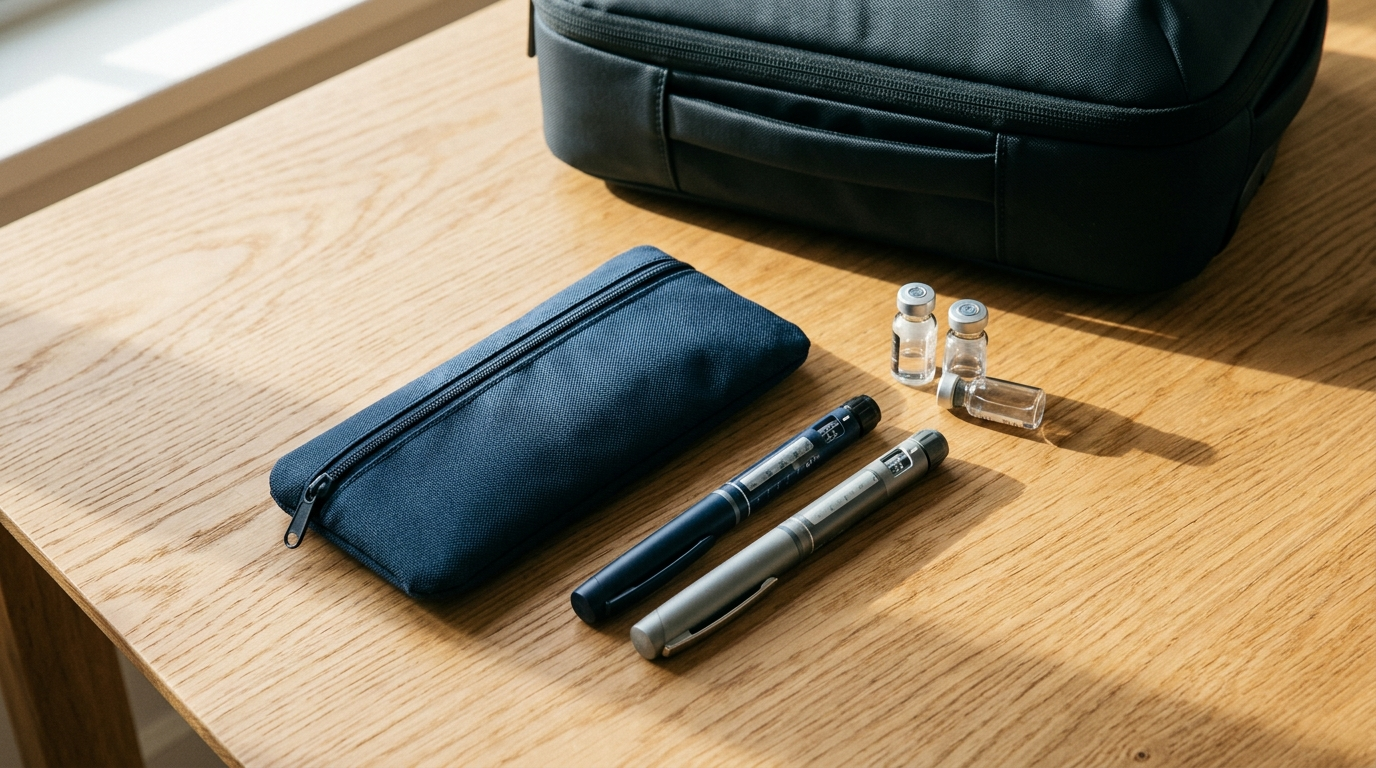
Now I travel with a Frio cooling wallet for every vial and pen I bring. These little pouches activate with cold water and keep insulin at a safe temperature for up to 45 hours. I soak mine in the hotel sink the night before a travel day and toss them in my carry-on. No ice packs, no bulky coolers, no stress about TSA questioning frozen gel packs.
If you are going somewhere extremely hot, like the Middle East in summer, bring two Frio wallets. One for active insulin and one for backup. The heat kills insulin faster than most people realize, and once it degrades, no amount of cooling will bring it back.
Pack Double the Supplies You Think You Need
I follow a simple rule now. I calculate exactly how many pens, test strips, pump supplies, and lancets I need for the trip, then I double it. Sounds excessive until your luggage gets lost in Frankfurt and you are standing in an airport at midnight with half a cartridge left.
I split everything between two bags. Half goes in my carry-on, half goes in my checked luggage. That way, if one bag disappears, I still have enough to last several days while I sort things out. I also throw in a handful of extra infusion sets and reservoirs even when I am only gone for a long weekend. Running out of supplies in a foreign country is not a fun way to spend a vacation.
One thing I always forget to double is glucose tabs. I now keep a full bottle in my day bag and another in my suitcase. Low blood sugar does not care about your itinerary.
Build a Carry-On Diabetes Kit That Actually Works
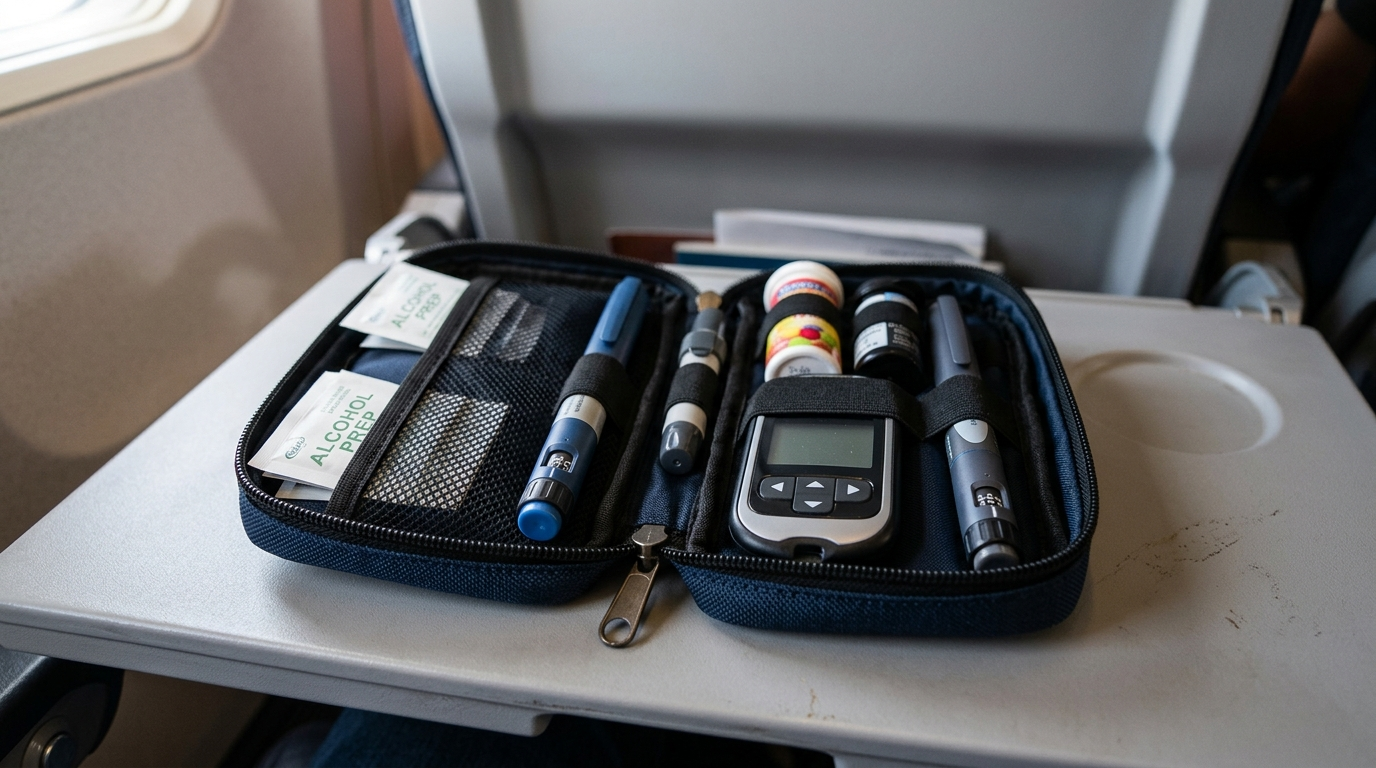
This is the part of my foolproof travel packing advice for diabetics managing insulin that I wish someone had told me years ago. Your carry-on diabetes kit should be a self-contained unit you can grab in under thirty seconds.
I use a small zippered pouch from MedAngel that fits all my essentials. Inside, I keep two insulin pens, a blood glucose meter with extra strips, a full bottle of glucose tabs, a glucagon emergency kit, alcohol swabs, and a printed copy of my prescriptions. Everything lives in that one pouch. I never unpack it between trips. I just restock it when I get home.
Keep this pouch in the seat pocket in front of you on the plane, not in the overhead bin. If your blood sugar drops during turbulence and the seatbelt sign is on, you do not want to be digging through a bag three rows away. I learned that one the hard way on a flight to Lisbon. Not a proud moment.
Handle Airport Security Without Losing Your Cool
TSA agents see insulin supplies every single day, but that does not mean every agent knows the rules. I carry a TSA notification card that I print from the TSA website before every trip. It lists my condition and the medical supplies I am carrying. I hand it to the agent along with my boarding pass before they start screening.
Insulin should never go through the X-ray machine if you can avoid it. Easy Travel Eating Tips for Travelers with Celiac Disease.
The evidence on whether X-rays damage insulin is mixed, but I am not willing to gamble with medication that keeps me alive. I always request a hand inspection. Tell the agent calmly and clearly that you have injectable medication that cannot be X-rayed. They will swab your supplies and wave you through. It takes about two extra minutes.
If you wear a Dexcom or Libre CGM, do not walk through the full-body scanner. The millimeter-wave technology can damage the sensor. Use the metal detector instead or request a pat-down. I have had agents insist I go through the scanner, and standing my ground politely but firmly has always worked.
Plan for Time Zone Changes and Meal Disruptions
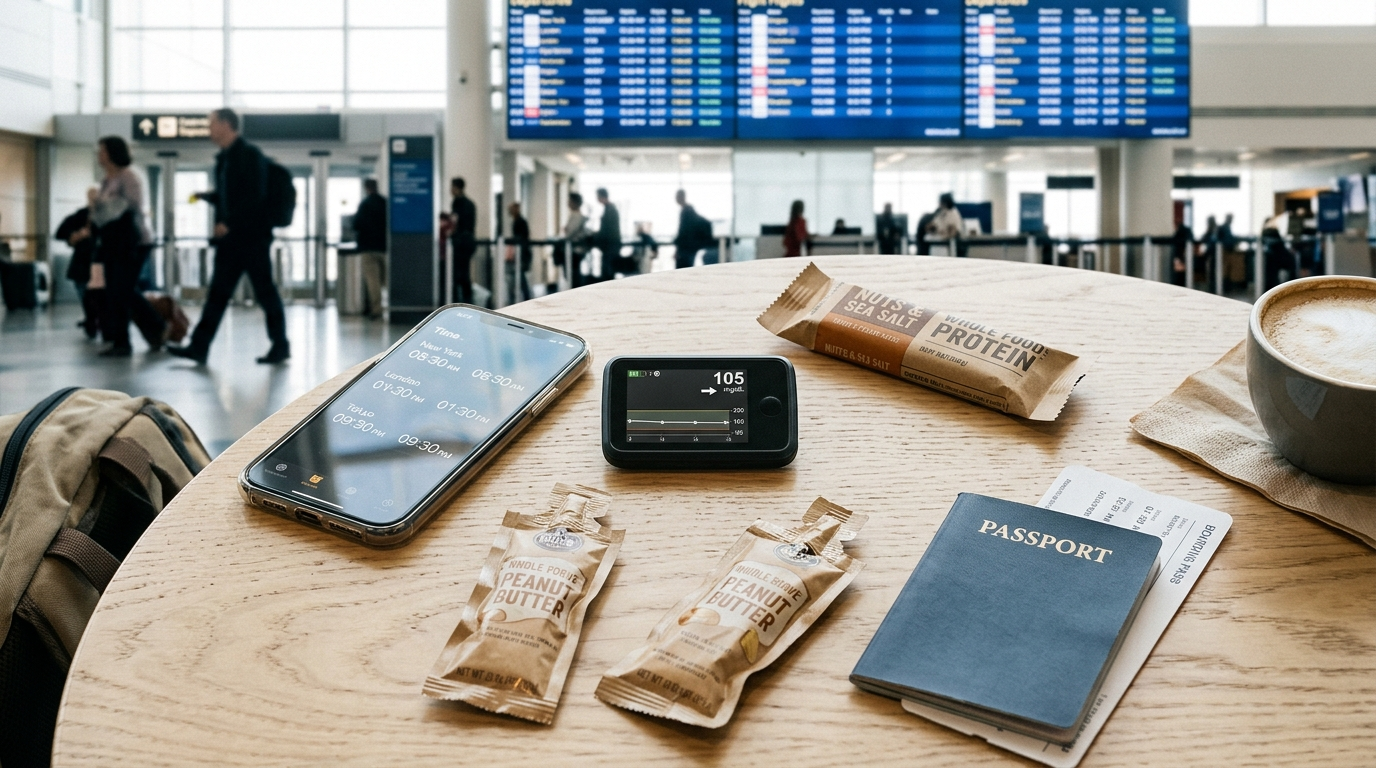
Crossing time zones with insulin is genuinely tricky, and most generic packing lists skip this entirely. When I flew from New York to Tokyo, I lost an entire day. My basal schedule went haywire, and I ended up correcting highs at 3 AM in a convenience store eating onigiri.
Before any trip that crosses more than three time zones, I talk to my endocrinologist about adjusting my basal rates. If you use a pump, this is relatively easy since you can program temporary rates. If you are on long-acting injections like Tresiba or Levemir, the adjustment is more manual, and you will want a specific plan written down.
I also pack shelf-stable snacks that I know will not spike me. RXBAR protein bars and single-serve peanut butter packets are my go-to items. They survive being crushed at the bottom of a backpack and they keep my blood sugar steady when airline meals are delayed or completely unrecognizable.
Prepare for Temperature Extremes at Your Destination
Insulin hates heat and it hates freezing. The safe range is roughly 36 to 86 degrees Fahrenheit, which sounds wide until you are standing on a tarmac in Phoenix in July or skiing in Colorado in January.
In hot climates, I keep my insulin in the Frio wallet at all times and never leave it in a parked car, even for five minutes. Car interiors hit 140 degrees fast, and your insulin will cook. In cold climates, I keep my pens in an inside jacket pocket close to my body heat. I once left a vial in an outer coat pocket during a ski trip and came back to a frozen, crystallized mess. That was an expensive lesson.
If you are unsure whether your insulin has been compromised, look at it. Clear insulin should stay clear. Cloudy insulin like NPH should mix evenly. If it looks clumpy, discolored, or has particles floating in it, toss it and use your backup.
Keep Your Documentation Ready to Go
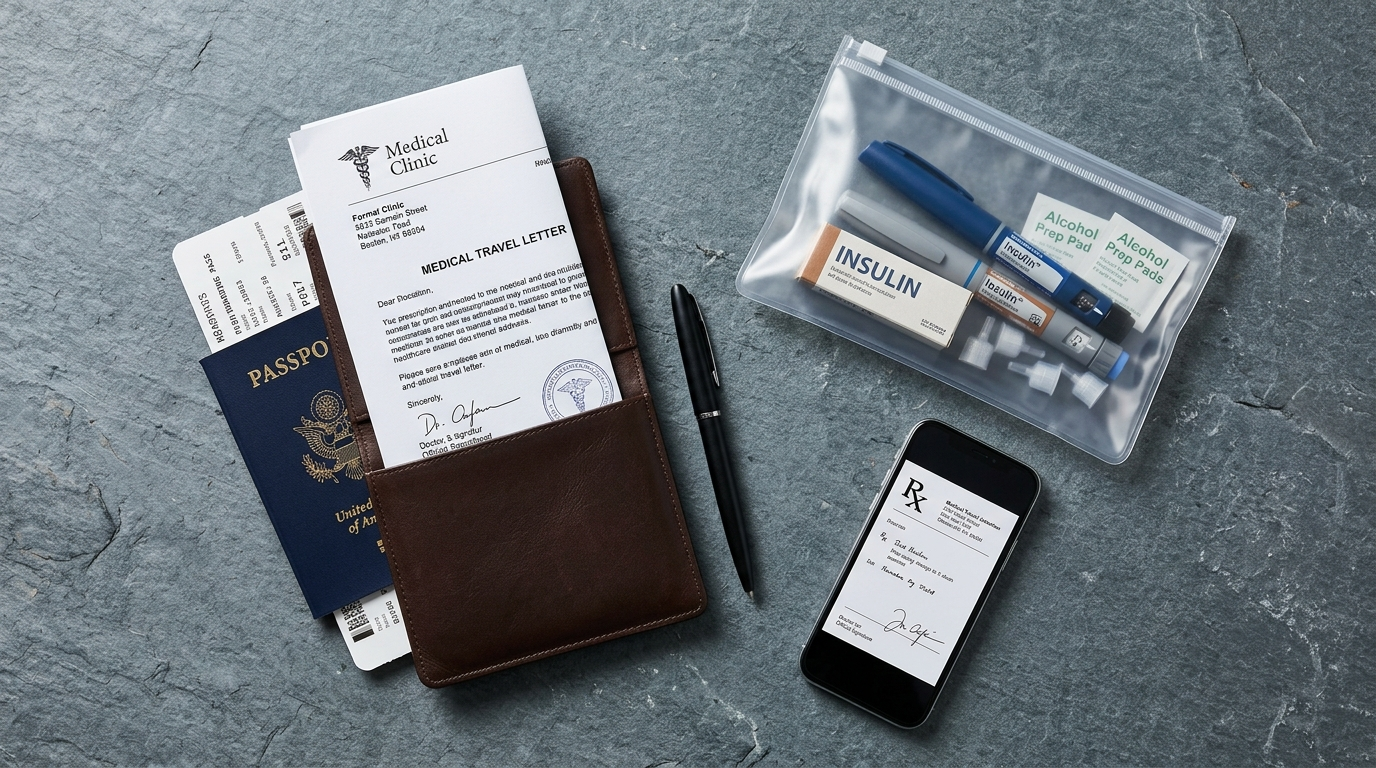
I keep a small folder in my carry-on with a letter from my doctor on official letterhead, a copy of all my prescriptions, and a list of my current medications with generic names. Some countries require this documentation at customs, and some pharmacies abroad will not fill a prescription without it.
The doctor letter should state your diagnosis, the medications you carry, and that you need to keep supplies with you at all times. Mine is one page, signed and dated within the last six months. I also save a photo of it on my phone in case the paper copy gets lost. IMO, this small step saves more headaches than anything else on this list.
FAQs
Can I bring insulin through TSA without a doctor’s note?
Yes. TSA does not require a doctor’s note for insulin or diabetes supplies. You can bring as much as you need for your trip. A note helps speed things up and reduces awkward conversations, but it is not mandatory. Just declare your supplies before screening starts.
How long does insulin stay safe without refrigeration?
Most opened insulin pens and vials are safe at room temperature for 28 days, though some brands like Tresiba last up to 56 days. Check the specific insert for your insulin. Unopened insulin needs refrigeration, which is where cooling wallets become essential on travel days.
What foolproof travel packing advice for diabetics managing insulin works best for long flights?
Keep all insulin and supplies in your carry-on, never in checked luggage. Cargo holds can freeze, and freezing destroys insulin instantly. Bring extra snacks, a full glucose kit within arm’s reach, and set alarms on your phone to check your blood sugar every few hours during the flight.
Should I wear my insulin pump through airport scanners?
Most pump manufacturers recommend avoiding full-body scanners and X-ray machines. Walk through the standard metal detector instead. If an agent insists on the scanner, politely explain that your medical device cannot go through it and request a manual pat-down. Know your rights before you arrive.
How do I dispose of used needles while traveling?
I carry a small hard-shell sharps container from BD that fits in my day bag. When it fills up, I seal it and dispose of it at a pharmacy or hospital at my destination. Never toss loose needles in a hotel trash can. Housekeeping staff deserve better, and many countries have strict disposal laws.
Conclusion
Traveling with diabetes takes extra planning, but it gets dramatically easier once you build a system and stick to it. The first trip feels overwhelming, and by the third trip you will be packing your insulin kit on autopilot while everyone else is still arguing about suitcase space. What is the one diabetes travel item you refuse to leave home without?

One thought on “Foolproof Travel Packing Advice For Diabetics Managing Insulin”